Unlocking the Power of Automated List Profits: A Comprehensive Review

Introduction:

When I first came across the product named "Automated List Profits," I must confess I was a tad skeptical. My past encounters with anything labeled "Profits" and "Automatic" had often left me feeling like I'd wasted my time. However, as a seasoned review writer in the online marketing industry, professionalism dictates that I approach every product with an open mind.

As it turns out, Automated List Profits is cut from a different and far superior cloth compared to most automatic profiting systems I've encountered. In this review, we'll delve into the features of this product and outline the myriad benefits it offers to both buyers and end-users.

Automated List Profits

Features and Benefits:

1) Exclusive PLR Rights and Quality Reports:

  • Automated List Profits includes non-transferable PLR rights to two monthly report packages, covering popular Internet business topics.
  • Each package comes complete with a meticulously curated keyword list, making it a valuable tool for targeted online promotions.
  • These reports aid end-users in discovering relevant information organically, aligning perfectly with their search intent.

2) Social Media Engagement Simplified:

  • The package also provides keyword and topic-related pre-written social media content for platforms like Facebook and Twitter.
  • This content can be seamlessly integrated into social media accounts, enticing followers to visit the buyer's squeeze page.

  1. 3) Professionally Designed Squeeze Pages:

  • Buyers receive two professionally designed squeeze pages and thank-you pages each month.
  • These pages are created by graphic artists, featuring compelling copy and persuasive bullet points that boost conversion rates.
  • The professional touch instills trust in visitors, increasing the likelihood of conversion.
      1. 4) Fresh and Actionable Monthly Reports:

      • Subscribers gain access to monthly reports with the latest research and topic-related developments.
      • These reports provide up-to-date and comprehensive information, leaving recipients eager for more.
        1. 5) Effective Follow-Up Strategies:

        • Each set includes a pre-written seven-part autoresponder email series.
        • These emails express gratitude to the subscriber, offer valuable advice, and seamlessly introduce lucrative offers.
        • The carefully selected products from ClickBank enhance the author's credibility and trustworthiness.
            1. 6) Building Trust with Instant Results:

            • Automated List Profits stands out for its ability to generate trust from the initial report phase to the follow-up email promotions.
            • The integration with pre-screened products from trusted affiliate marketplaces like JVZoo and ClickBank further strengthens this trust.
              1. 7) Fully Customizable Elements:

              • Every component of these packages is editable and customizable.
              • With minimal effort, entrepreneurs can personalize the content by adding themselves as the author and including their affiliate ID where needed.
                1. 8) Quick Start to Profits:

                • This package is designed for efficiency, allowing entrepreneurs to start making money and growing their email list in less than half an hour.
                • The reports address burning questions in the Internet business and work-at-home niches, ensuring a constant stream of interested customers.
                  1. 9) Always Relevant and Up-to-Date:

                  • Unlike other private label rights products, Automated List Profits consistently delivers relevant and accurate content.
                  • Your email list will thrive with well-informed subscribers who repeatedly purchase products through this system.

                    Conclusion:

                    In my experience, similar-priced private label rights products often require buyers to sift through heaps of irrelevant content to find a hidden gem, if one exists at all. Automated List Profits, however, offers consistently relevant and high-quality material that any entrepreneur would be proud to associate their name with.

                    With this system, your email list is poised to grow exponentially, filled with satisfied and well-informed subscribers who will keep coming back for more. Automated List Profits may just be the game-changer you've been looking for in the world of online marketing. Don't miss the opportunity to harness its potential for your success.

                    See for yourself at: https://www.unlikontent.com/alp


                    Unraveling the Martires Doctrine: Transparency vs. Efficiency in Government Spending

                    The Martires doctrine was also published by The Manila Times on 20 September 2023


                    In a recent congressional hearing on the budget for the Office of the Ombudsman, Ombudsman Samuel Martires made a bold statement, asserting that there was no need to show receipts for expenses charged to confidential funds. In 2022, the Office of the Ombudsman was allocated a substantial P51 million for confidential funds, prompting Party-list Rep. France Castro to seek clarification on how these funds were being utilized. The Controversy Unveiled Martires firmly held his ground when faced with Castro's inquiry regarding the submission of receipts to the Commission on Audit (CoA) for auditing purposes. He argued, "If you require an agency of government with confidential funds to submit receipts, it is no longer a confidential fund." Nevertheless, Castro countered his stance by referencing Joint Circular 2015-01, a comprehensive document signed by multiple government agencies, which explicitly mandates the submission of receipts for confidential fund expenditures. The Regulatory Landscape Joint Circular 2015-01, issued on January 8, 2015, involves the Commission on Audit (CoA), the Department of Budget and Management, the Department of the Interior and Local Government, the Governance Commission for GOCCs, and the Department of National Defense. Section 6.2.3 of the circular specifies that the liquidation of cash advances for confidential funds (CF) and/or intelligence funds (IF) must be supported by specific documentary requirements, including a liquidation report, a certified copy of the check and paid disbursement voucher (DV), and documentary evidence of payments. A Clash of Perspectives Martires, who assumed his role in 2018, maintained that no one had instructed him to submit receipts, emphasizing the impracticality of requiring intelligence officers to do so. He argued that this practice could jeopardize sensitive operations by revealing case details and result in tedious, repetitive tasks. His position suggests that a certification should suffice for liquidating CFs or IFs, bypassing the need for receipts. However, critics contend that such documents can be easily fabricated. Martires even suggested that Congress consider eliminating confidential funds altogether if they become a source of dispute, proposing that "they can learn how to live without it." The CoA Dilemma In the same congressional hearing, Ombudsman Martires raised another point of contention – the requirement for the publication of an "audit observation memorandum" in the General Appropriations Act (GAA). He argued that this provision caused confusion and led to protracted resolution of complaints, resulting in dismissals due to "inordinate delay." Furthermore, he expressed concern that these dismissals could tarnish the reputation of the Ombudsman. Balancing Transparency and Efficiency While Martires' perspective may seem to protect against corruption, it could inadvertently hinder transparency. Making CoA reports public serves not only to promote government accountability and performance but also to build trust among taxpayers and constituents. Certification as a method of liquidation poses challenges, as it can be easily manipulated, particularly by corrupt individuals. A potential solution could be an accomplishment report that demonstrates the positive correlation between confidential fund or intelligence fund inputs and the successful prosecution of cases. In conclusion, Ombudsman Martires' stance challenges conventional wisdom regarding the handling of confidential funds in government. It underscores the need to strike a balance between flexibility in executing tasks and ensuring accountability. As this debate continues, it remains to be seen whether the Martires Doctrine will prevail or if a compromise will emerge, allowing both efficiency and transparency to coexist in government spending practices.

                    Revolutionizing Governance: The Vision of a People's Congress

                    Photo credit: Inquirer.net

                    Pioneering a New Paradigm: The People's Congress

                    Looking ahead to the next two or three generations, the discourse on envisioning a transformative People's Congress to supplant the current Senate and House of Representatives—or any evolved forms following a potential shift to federalism—should initiate. The impetus for overhauling the representation system in government arises from years of grappling with a malfunctioning political landscape. As previously stated, Congress, once an extension of presidential influence, now resembles a superfluous appendix, prompting contemplation on its abolishment to rejuvenate the democratic ideal.

                    A People's Congress embodies direct citizen participation. This encompasses Filipino citizens, registered voters scattered across the globe, collectively exercising the powers and functions vested in the present Congress members. Advancements in communication technology furnish the means for the viability of this concept, a luxury absent during the inception of the United States. When the Founding Fathers convened in what is now Washington DC, they laid the groundwork for American independence and the two houses of Congress. Albeit mirrored in our own system, this conventional model is now antiquated, outshined by the digital age.

                    A Glimpse of the Future: Technological Foundation

                    Modern social networking platforms—Facebook and YouTube being prime examples—where up to 500 million users concurrently engage, fostering dialogue and even hosting live broadcasts, offer a window into the future People's Congress.

                    Imagine a secure web portal, fortified by alternating servers, accommodating up to 100 concurrent committee meetings. To partake in these sessions, a voter must first register, subsequently accessing the portal with their COMELEC credentials. The user-friendly interface would grant effortless access to committee "rooms," fostering an environment conducive to advocating for or opposing legislative proposals. Feedback would be ranked by the number of "likes" or supporters.

                    Innovation in Action: Streamlined Decision-making

                    The existing concept of people's initiative, stipulated in the current constitution, would naturally evolve into the default process for presenting, deliberating, and sanctioning legislative proposals, obviating the need for collecting signatures.

                    A dedicated People's Secretariat, in collaboration with the Department of Information and Communications Technology, would emulate the functions of the current Congressional Secretariat, managing the operation of the People's Congress website.

                    Fundamental congressional protocols, such as committee meetings and plenary sessions, would be preserved to the extent feasible. For certain cases—bill approval, impeachment rulings, and international treaty ratifications—a simple majority of registered users constitutes a quorum. Legislative proposals must secure a majority within a year; failure prompts resubmission as a fresh bill, commencing another cycle of review, debate, and revision.

                    Empowerment Through Unity: One User, One Vote

                    The principle of one user, one vote stands—users cannot possess multiple accounts, reinforcing fairness and equality. The inaugural People's Congress session might focus on the national budget's approval. Subsequent gatherings prioritize budget discussions over other pending matters. As a transitional measure, pending bills from the existing congress would be automatically reintroduced.

                    Certain prerequisites must be met before the People's Congress can function effectively. Assuming the free WIFI bill transitions into law—potentially initiated by local government units—the executive branches of government, encompassing LGUs, and the civil service system would remain unchanged. Nonetheless, an analogous People's Congress model for LGUs, mirroring the national version, would eventually emerge within a phased timeline.

                    A Beacon of True Democracy: For the People, By the People

                    The People's Congress breathes life into the adage "government by the people, of the people, and for the people." The logical progression entails constitutional amendment to institute the People's Congress via people's initiative.

                    For visionaries like myself, it's prudent to acknowledge that, albeit inadvertently, this proposal could displace certain individuals—especially those tied to political dynasties—from their positions of power. Patience becomes paramount, as we embrace this cause, much like a caterpillar metamorphosing into a butterfly, shedding its former self to embrace a new, transformative identity.

                    ----------

                    This is a rewrite of an article first published on 13 July 2019 with the title "Visualizing a People's Congress".

                    Redefining Government Efficiency: A Call for Prudent Reforms

                    Photo credit: eRepublic

                    Rethinking Governance: A Bold Proposition

                    Amid the labyrinth of governance intricacies, a radical notion emerges: could abolishing, rather than proliferating, government agencies be the antidote to a myriad of challenges? Furthermore, envisioning a future where citizens directly shape collective decisions, circumventing elected representatives, casts a new light on the role of institutions such as Congress. This shift relegates them to redundancy and bolsters the case for their dissolution.

                    Presently, the imperative to streamline governmental operations beckons. Instances abound:

                    Congress: A Mere Extension of Presidential Influence

                    Amid reports that House members gauge the President's body language to elect a Speaker, a disconcerting pattern emerges. This behavior implies a lack of independent thought and reveals Congress as a costly appendage—a relic of bygone democratic aspirations, rendering itself superfluous.

                    Judicial Languor and Political Careerism

                    The lengthy trials of Jinggoy Estrada and Junjun Binay epitomize judicial stagnation. Pronouncements arrived only after voter decisions quashed their political hopes. The languid pace of justice delivery epitomizes public servants as freeloaders, thriving in a culture reliant on private enterprise and community effort.

                    The Myth of Government Assistance

                    A closer look at poverty exposes a paradox. Rural toilers labor tirelessly for crops on lands often owned by landlords. Urban workers struggle with meager wages, while informal settlers subsist near dumps or beneath bridges. Fishermen brave tempests to sustain families. What the poor truly yearn for is equitable enforcement of laws. Government's role is simple: safeguard farmers from price manipulation, shield urban dwellers from unjust evictions, and defend fishermen's rights against foreign aggressors. In the absence of fairness, government becomes irrelevant to the impoverished.

                    Government's Waste and Stagnation

                    Resource wastage by the government often hampers its responsiveness and efficiency. Institutional amnesia and a lack of knowledge management exacerbate corruption, hampering effective problem-solving. Initiatives such as establishing a Department of Water Services signal the belated recognition of squandered opportunities. The National Water Crisis Act of 1995 sought to avert the current water predicament. Watershed significance is underscored: dams hinge on their supportive ecosystems. Yet, commercial interests ravage these ecosystems, necessitating costly rehabilitation financed by taxpayers.

                    Missteps in Governance Through History

                    A retrospective examination unearths unsettling truths. Secretary of National Defense Juan Ponce Enrile marred the forests of Samar while transforming the military into a personal army. The resulting intimidation curtailed resistance against the pillaging of San Jose Timber Corporation, owned by Enrile himself. In another instance, the Werfast gun licensing imbroglio, involving ex-PNP Chief Alan Purisima, exposes corruption hindering police modernization. This echoes in the military's growth—stymied by monetary pursuits, even arms trading with rebel factions.

                    Yearning for True Transformation

                    The tapestry of government is riddled with missed opportunities, whether by negligence or intent. This cumulative frustration begs the question: how long can citizens endure the wait for tangible, enduring change? The thirst for genuine progress intensifies as aspirations remain unmet, casting doubt on the trajectory of governance.

                    Redefining the Future: A Quest for Reform

                    In the intricate mosaic of governance, a call for reformation reverberates. An efficient, responsive government remains a utopian ideal. The proposition to abolish redundant entities and empower citizens in collective decisions echoes the spirit of true democracy. The quest for a streamlined, accountable government becomes paramount. To advance the welfare of the nation and its constituents, a reimagining of governance—one anchored in transparency, fairness, and progress—beckons.

                    -----------

                    This is a rewrite of an article first published on 13 July 2019 with the title "Useless".

                    Deciphering Voter Trends: An Analysis of Senatorial Candidate Preferences

                    Winston Churchill on the average voter. Photo credit: Screengrab from Twitter.com


                    Unveiling the Pulse Asia Survey Results

                    In April 2019, the Philippines witnessed a pivotal moment as the latest Pulse Asia survey unveiled the leading senatorial candidates a month before the May 13 elections. The top 12 candidates emerged in the following sequence: 1. Cynthia Villar, 2. Grace Poe, 3. Lito Lapid, 4. Pia Cayetano, 5. Bong Go, 6. Sonny Angara, 7. Bong Revilla, 8. Bato dela Rosa, 9. Nancy Binay, 10. Koko Pimentel, 11. Imee Marcos, and 12. Jinggoy Estrada.

                    While survey results might falter, they could also reflect a significant shift in the political landscape. If accurate, these findings underscore the likelihood of elevating five candidates with questionable backgrounds to senatorial positions. Revilla, acquitted of one charge but ordered to return P124.5 million, grapples with 16 graft charges. Estrada faces trial for plunder and graft, albeit on bail. Marcos contends with an Ombudsman probe on alleged tobacco fund misuse. Lapid encountered graft charges in 2015, eventually dismissed due to Ombudsman investigation delays. Dela Rosa, meanwhile, faces a complaint tied to alleged Davao Death Squad activities.

                    Churchill's Caution and the Complexity of Voting

                    Winston Churchill's famous remark about democracy and the average voter's intellect resounds through the years. He cautioned that a brief conversation with an average voter reveals the pitfalls of democracy. This insight remains relevant as we analyze voter trends and their potential impact on the nation's trajectory.

                    The Challenge of Informed Voting

                    Churchill's point raises concerns about uninformed and irrational voting. Beyond ignorance, some voters are consciously disinterested or driven by falsehoods. These dynamics pose a challenge to the democratic process. A key question emerges: Who is the average voter, and what influences their decisions?

                    Appearance vs. Record: A Tug of War

                    A glimpse into the choices of voters reveals an intriguing tussle between appearance and record. The popularity of Revilla and Estrada — propelled by charisma — underlines a propensity to prioritize personality over accomplishments. This preference extends to Lapid and other frontrunners, where media exposure significantly influences outcomes.

                    The critical factor appears to be awareness levels. The top seven candidates, ranked by votes, boast awareness rates exceeding 98 percent. This underscores the power of recall built over years of messaging, emphasizing the need for sustained media outreach preceding elections. Notably, newcomers like Chel Diokno, Romy Macalintal, and Samira Gutoc, who gained media prominence during the campaign, exhibit lower awareness rates (31 to 50 percent).

                    The Significance of Media Presence

                    The resonance of the average voter with media messages necessitates an extended media presence to impact their choices. The identities of Poe and Villar, intrinsically linked to public figures like Fernando Poe Jr. and Manny Villar, showcase the transcendence of awareness. This phenomenon highlights the voter's reliance on familiar associations.

                    Intellectual Prowess vs. Relatability

                    Intriguingly, voters may not be drawn to intellectual superiority in candidates. The average voter might lean towards candidates they perceive as relatable. Consequently, candidates like Pimentel and Pilo Hilbay, distinguished bar topnotchers, might not elicit the same enthusiasm as candidates who connect on a more approachable level. MATHGRAD's rivalry with Larry Gadon, despite Gadon's absence of intellectual acclaim, echoes this sentiment.

                    The Power of Influences

                    External forces play a pivotal role in shaping voter decisions. Whether influenced by promises of career progression or indebtedness to sources of support, voters are swayed by factors beyond mere merit. Circumstances involving Robin Hood figures, drug lords, warlords, or political dynasts can alter the voter's path.

                    Love for Victory and Collective Influence

                    A deep-seated human trait is the affinity for winners. Backing survey leaders transforms the average voter into a vicarious winner. The psychological satisfaction of being associated with the winning group further steers voter choices.

                    Democracy's Unceasing Struggle

                    As the Philippines navigates its democratic journey, the average voter's characteristics continue to mold the nation's course. Churchill's observation, while incisive, should not deter the ongoing quest for informed and responsible voting. The average voter's identity comprises a diverse spectrum, encompassing individuals from various walks of life, experiences, and motivations. Recognizing this complexity is essential for refining the democratic process and ensuring that voter preferences align with the nation's progress.

                    ------------

                    This is a rewrite of an article first published on 10 May 2019 with the title "The Average Voter". 

                    Balancing Priorities: Security and Poverty Alleviation


                    Photo credit: Business World Online

                    Intriguing Perspectives on Priorities

                    Foreign Affairs and the Challenge of Priorities

                    Foreign Affairs Secretary Teddy Boy Locsin recently stirred the conversation on Twitter with a thought-provoking statement: "... Every country can speak whatever is on its mind. What [China] says should not determine foreign policy but it should inform the national budgetary process that we gotta stop throwing money at poverty and throw it at weaponry...." This intriguing perspective raises questions about the delicate balance between national security and poverty alleviation.

                    Reacting to Perspectives

                    Locsin's words were in response to a tweet by Senator Panfilo Lacson, who shared an interview transcript with China's then Maj. Gen. Zhang Zhaozhong discussing Beijing's 'cabbage strategy' during the 2012 standoff with the Philippines over Scarborough Shoal. The conversation underscores China's territorial actions and mindset.

                    Locsin's assertions have sparked discussions, including criticism from individuals like celebrity entertainer Regine Velazquez, who voiced concerns about territorial invasions. Velazquez's response highlights the emotional dimension of foreign policy decisions.

                    Unraveling the Arguments

                    Locsin's viewpoint merits scrutiny. While his emphasis on bolstering national security is valid, his stance on diverting resources from poverty alleviation warrants a closer examination.

                    Clams and Territorial Transgressions

                    Addressing China's actions requires more than dismissing them as mere clams. The incursion involves territorial transgressions that go beyond theft, raising concerns about sovereignty and environmental impact. These actions are part of a larger pattern of territorial violations that demand robust responses.

                    Constitutional Responsibilities

                    Critically, the Constitution charges government with addressing poverty and promoting security. The presence of party-list members in the House of Representatives underscores the commitment to addressing marginalized sectors. Security and poverty alleviation are not opposing pursuits, but rather intertwined imperatives that shape a nation's progress.

                    Challenging Dichotomies

                    Contrary to Locsin's assertion, the pursuit of security need not come at the expense of poverty alleviation. Navigating these priorities requires a balanced approach that acknowledges both imperatives.

                    The Role of Diplomacy

                    The notion that focusing on security negates poverty alleviation oversimplifies complex global dynamics. Framing the scenario as Jerry the mouse versus Tom the cat overlooks the nuanced role of diplomacy in shaping outcomes. Diplomacy offers a means to influence rules and perceptions on a larger stage.

                    Strengthening Anti-Poverty Initiatives

                    Dissatisfaction with anti-poverty efforts is understandable, but the solution lies in enhancing these initiatives, not abandoning them. Addressing poverty is not just a social imperative; it's a strategic move that empowers a nation to manage internal and external challenges effectively.

                    Converging Goals: Security and Prosperity

                    For nations with histories of colonization and exploitation, security and poverty eradication converge as fundamental goals. Viewing them as competing aims fails to recognize their interconnectedness. A nation that succeeds in one and falters in the other does not achieve half-success; it faces a comprehensive failure.

                    Shifting Perspectives

                    The belief that weapons alone can ensure safety reflects a limited perspective. A broader outlook recognizes the power of skillful diplomacy in shaping a balanced playing field. Embracing a strategic approach that accounts for both security and poverty alleviation is essential.

                    The Way Forward

                    Balancing security and poverty alleviation demands strategic foresight. Rather than pitting priorities against each other, the challenge lies in harmonizing them for comprehensive progress.

                    In Conclusion

                    Foreign Affairs Secretary Teddy Boy Locsin's insights spark contemplation on the interplay between national security and poverty alleviation. The discourse underscores the complexity of addressing these priorities and the need for a nuanced approach that acknowledges their symbiotic relationship. As nations navigate global dynamics, the quest for security and prosperity emerges as an integrated pursuit that shapes the trajectory of nations on the global stage.

                    -----------

                    This is a rewrite of an article first published on 10 May 2019 with the title "Weaponry or Poverty?".

                    Enhancing Transparency and Efficiency with Open Government Contracting

                    Photo credit: Open Contracting


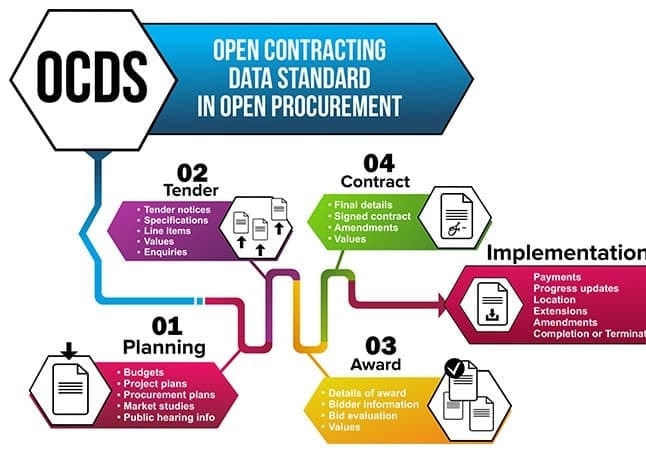
                    In the realm of procurement and contracting, a groundbreaking approach is revolutionizing how governments and organizations manage public funds. This cutting-edge practice, known as Open Contracting Data Standard (OCDS), introduces an innovative framework to foster transparency, effectiveness, and integrity in public contracting processes. Developed in 2014 by the World Bank in collaboration with the Omidyar Network, OCDS holds the potential to reshape the landscape of government expenditure.

                    Unlocking Insights through Open Contracting Data Standard (OCDS)

                    Open Contracting Data Standard (OCDS) emerges as a dynamic open data standard that pioneers the online dissemination of structured information at every phase of the contracting journey. This process spans from initial planning to seamless implementation. OCDS, as defined by open-contracting.org, encompasses both procurement and contract administration aspects, including the crucial stage of compensating contractors and providers for their delivered goods and services.

                    Transparency at Every Level

                    OCDS operates on a three-tier disclosure model, each catering to different levels of information granularity. The fundamental level encompasses tender and award notifications. The intermediate stage advances beyond basic data by incorporating unique identifiers and JSON-based classifications. Notably, this tier also encompasses downloadable, structured excel files in CSV format, providing comprehensive accessibility.

                    A Leap into Advanced Detail

                    The apex of OCDS introduces the advanced level, encompassing intricate aspects such as contract amendments and updates. The dataset extends to include comprehensive contract particulars and the real-time status of both physical and financial progress. This enriched level of detail facilitates a deeper understanding of the contracting landscape.

                    Harnessing the Power of Unique Identifiers

                    Comparable to an ISBN for published books, the unique identifier serves as the backbone of OCDS. This identifier is affixed to contractors, ensuring their traceability and accountability. This transformative feature empowers anyone with internet access to delve into the contracting history of an entity like Company X. This capability extends to scrutinizing completed and ongoing contracts, fostering a higher level of transparency.

                    Unleashing the Potential

                    The strategic interlinking of data sets utilizing JSON and APIs paves the way for OCDS's unparalleled functionality. These interconnections facilitate dynamic analyses and empower stakeholders to unearth insights that were previously concealed.

                    A Roadmap to Better Governance

                    The implications of OCDS transcend the realm of data standardization. By embracing and deploying structured, standardized data about public contracting, stakeholders can unlock a myriad of advantages. These include:

                    • Enhanced Value for Money: Governments can optimize their resource allocation, yielding better returns on public spending.
                    • Elevated Fairness: OCDS fosters an equitable competition arena, leveling the playing field for businesses of all sizes, particularly smaller enterprises.
                    • Elevated Quality of Goods and Services: Through comprehensive insights, stakeholders can drive the delivery of high-caliber goods, works, and services to citizens.
                    • Fraud Prevention: OCDS serves as a shield against corruption and fraudulent activities, ensuring that public funds are channeled toward their intended purposes.
                    • Empowering Smart Analysis: The abundance of data paves the way for astute analyses, nurturing innovative solutions to complex public challenges.

                    Trust and Transformation

                    OCDS champions the notion that public access to open contracting data is the bedrock of trust-building. This approach guarantees that the substantial investments made by governments yield improved services, superior goods, and transformative infrastructure projects. Currently, OCDS is gaining traction in numerous countries, encompassing Canada, the United Kingdom, Mexico, Romania, Moldova, Ukraine, Colombia, Costa Rica, and Paraguay.

                    PhilGEPS: A Collaborative Path Forward

                    The Philippine Government Electronic Procurement System (PhilGEPS) already facilitates access to procurement-related data via its website. While the platform presently offers downloadable CSV files of tender and award notices, its evolution in the direction of open data initiatives such as OCDS is foreseeable. This evolution stands to unlock a treasure trove of additional insights accessible through open-domain websites.

                    Illuminating the Shadows of Corruption

                    In a landscape riddled with gaps in government procurement and contract administration, substantial portions of public funds remain susceptible to wastage. Recently, Deputy Ombudsman Cyril Ramos disclosed that the Philippines suffers a staggering loss of around P700 billion annually, equivalent to approximately 20 percent of the nation's total budget allocation, due to corruption.

                    The vision of a corruption-free government procurement system resembles a prized treasure at the end of the rainbow. Although the aspiration to attain this treasure remains unwavering, the journey proves challenging. However, the government is not powerless; it holds the capacity to channel funds towards the betterment of its constituents' lives. The critical obstacle lies in redirecting these funds away from private gain and towards public welfare. Notably, Mr. Ramos underscored that the financial loss due to corruption could have been directed towards initiatives such as providing housing for 1.4 million impoverished individuals, extending medical assistance to 7 million Filipinos, or sustaining a year-long stockpile of rice.

                    The OCDS Promise: Sealing Procurement Leaks

                    The OCDS methodology offers a beacon of hope for sealing the fissures that contribute to procurement-related losses. To transform this promise into tangible progress, the onus rests on policymakers to integrate OCDS into government procurement and contracting procedures. This proactive step has the potential to catalyze profound change and usher in an era of enhanced transparency, efficiency, and equitable resource allocation.

                    ------

                    This is a rewrite of an article first published on 8 October 2019 with the title "Open Government Contracting".

                    Embracing Infrastructure: The Dual Facets of Development

                    Photo credit: Philstar.com

                    In the tapestry of governance and development, infrastructure emerges as a cornerstone that garners favor from various quarters. From politicians seeking tangible accomplishments to citizens relishing improved connectivity, the allure of infrastructure projects resonates deeply. However, beneath this admiration lies a complex web of economic, social, and ethical considerations that shape the impact of these endeavors.

                    Infrastructure as a Political Triumph

                    History underscores the political prowess of infrastructure projects. In the 1990s, President Fidel Ramos orchestrated the Club of 20, an alliance focused on transforming the nation. Spearheaded by Bitay Lacson, this initiative spotlighted the pivotal role of physical infrastructure in shaping the future. Subsequent presidents, both lawyers like Ferdinand Marcos and Rodrigo Duterte, aligned with this ideology by prioritizing capital-intensive infrastructures to symbolize progress and prosperity.

                    The public, captivated by tangible edifices that signify growth, readily gravitates towards these developments. Infrastructure projects, ranging from roads to airports, establish an undeniable visual testament to a government's achievements. The allure of these projects extends beyond mere aesthetics, creating a narrative that resonates with the masses.

                    The Economic Engine: Infrastructure's Catalytic Power

                    Beyond their visual appeal, infrastructure projects wield significant economic influence. Investments in infrastructure, amounting to trillions of pesos, serve as catalysts for economic growth. These projects not only stimulate economic activity but also generate employment opportunities, fostering a cyclical chain reaction that benefits society at large.

                    Infrastructure projects mirror the magnitude of Overseas Filipino Workers (OFW) remittances, contributing to a robust Gross Domestic Product (GDP). As they bolster the nation's economic landscape, infrastructure investments validate the efficacy of government's economic management, garnering confidence from both local and international stakeholders.

                    The Duality of Progress: Benefits and Drawbacks

                    While infrastructure projects offer transformative potential, they bear the responsibility of addressing societal needs comprehensively. Unfortunately, their allure often obscures the nuanced balance between benefits and drawbacks. As the allure of progress takes center stage, overlooking the ramifications of project execution becomes a sobering reality.

                    Corruption, an adversary entrenched in various facets of governance, can tarnish even the noblest of infrastructure endeavors. The infamous Bataan Nuclear Power Plant and the Makati Science High School Building exemplify instances where graft marred the implementation process. Overpriced projects and illicit practices cast a shadow on these initiatives, detracting from their intended impact.

                    The Complex Ethos: Prioritizing Infrastructure Amidst Scarce Resources

                    The choice to prioritize infrastructure projects is neither unequivocal nor devoid of ethical considerations. In the midst of competing government priorities and limited resources, striking a balance between immediate needs and future growth emerges as a conundrum. While infrastructure projects benefit the affluent, their impact on marginalized communities remains indirect, primarily through employment opportunities.

                    Even seemingly altruistic initiatives, like Farm to Market Roads, hold the potential to perpetuate income disparity. Such projects, while essential for farmers, inadvertently favor those with vehicular access over those who rely on foot travel. The long-term outcome can inadvertently exacerbate societal inequalities.

                    Navigating the Infrastructure Landscape: A Holistic Approach

                    Addressing the multifaceted implications of infrastructure projects necessitates a holistic approach that transcends superficial progress. Comprehensive evaluation, encompassing factors like Social Internal Rate of Return ratios, can enable better decision-making. Infrastructure projects should be aligned with a broader vision, complementing health, education, and direct interventions for vulnerable sectors.

                    Rather than viewing infrastructure projects in isolation, they should be integrated into a mosaic of development initiatives. This interconnected approach can mitigate the economic disparities that often emerge from the concentrated benefits of infrastructure projects. While the allure of infrastructure remains undeniably captivating, its realization should adhere to an ethical compass that safeguards the well-being of all citizens.

                    Embracing Balance: Paving the Path Forward

                    Embracing infrastructure projects as vehicles of progress requires a delicate balancing act. The allure they exude, coupled with their economic potential, must coexist with a comprehensive understanding of their social and ethical ramifications. As governments seek to shape the future through tangible structures, the simultaneous elevation of marginalized communities should remain a steadfast priority.
                    -------
                    This is a rewrite of an article first published on 13 July 2019 with the title "Everybody Loves Infra".

                    Overcoming Red Tape: The Costly Burden of Commitment Fees

                    Long queues inside a government office. Photo credit: Philstar.com

                    In the realm of governance, red tape stands as a manifestation of bureaucratic complexity that often results in inaction and delays. Ironically, this term finds its origin in the Roman Empire's bureaucratic practices where red tapes were used to denote documents that required immediate attention. Today, red tape is a form of corruption that shackles progress and frustrates citizens.

                    The Red Tape Predicament: Corruption in Official Guise

                    Corruption, whether overt or concealed, exudes a detrimental impact on society. The intertwining of red tape with corruption creates a toxic concoction that leaves citizens disillusioned and endeavors paralyzed. While corruption may sometimes result in the circulation of funds within the local economy, red tape unilaterally siphons resources away, leading to an unfruitful cycle.

                    The Philippines has experienced instances where bureaucratic inefficiency has led to prolonged suffering. For instance, the Emergency Shelter Assistance for Yolanda victims was disbursed two years after the calamity struck, highlighting the shortcomings of government's response mechanisms. Furthermore, housing projects in disaster-hit areas remain incomplete, leaving citizens displaced and disappointed.

                    Red Tape and Commitment Fees: An Underlying Nexus

                    For government projects financed by external loans or Official Development Assistance (ODA), red tape's monetary implications materialize as commitment fees. These fees materialize as penalties levied on the borrower for implementation delays. When projects fail to adhere to timelines, commitment fees act as an additional burden, diverting funds that could otherwise contribute to project execution.

                    These fees stem from undisbursed funds that would have otherwise yielded interest for the lender. Rather than nurturing local development, commitment fees act as wasteful expenses that detract from the welfare of citizens. The magnitude of this issue becomes apparent when considering the substantial sum of money dedicated to commitment fees.

                    COA Insights: Unveiling the Scope of the Problem

                    Reports by the Commission on Audit (COA) shed light on the alarming scale of commitment fees in the Philippines. Over a span of six years (2012-2017), the national government incurred commitment fees amounting to Php 1.3 billion, averaging Php 213 million annually. This revelation underscores the urgency of addressing the red tape issue to salvage valuable resources.

                    The 2017 COA report delves further by identifying government agencies with the highest number of projects delayed due to implementation issues. The Department of Transportation, Department of Agriculture, and National Irrigation Administration are among the entities grappling with delays. These bottlenecks arise from a myriad of factors, including sluggish procurement processes and complications in releasing counterpart funds.

                    Mitigating Delays: Paving a Path Forward

                    Efforts to mitigate project delays and commitment fees are multifaceted, demanding comprehensive strategies. Firstly, establishing a dedicated unit under the Office of the President to coordinate ODA-funded projects can enhance synergy among agencies. Additionally, opting for projects with streamlined design elements can curtail complexity-related obstacles.

                    Furthermore, enforcing accountability by sharing the burden of commitment fees with bureaucrats failing in their duties can serve as a potent deterrent. By directly implicating public officials in the financial consequences of red tape, the system can drive conscientiousness and efficiency.

                    Upholding Progress: A Collective Endeavor

                    Addressing red tape transcends mere policy adjustments; it requires a collective effort to uphold the welfare of citizens and the integrity of projects. Redirecting resources from commitment fees back into development initiatives can invigorate local economies and elevate the living standards of Filipinos.

                    As commitment fees persist as a financial drain, they serve as a stark reminder of the pressing need for change. By dismantling bureaucratic roadblocks and fostering a culture of efficiency, the Philippines can forge a brighter path toward progress, unhindered by the shackles of red tape.
                    -------
                    This is a rewrite of an article first published on 13 July 2019 with the title "Commitment Fees".